Ghana Travel Guide 2026: Everything a First-Timer Needs to Know
Planning your first trip to Ghana? This complete 2026 travel guide covers visas, vaccinations, currency, safety, best time to visit, what to pack, where to go, and how to get around — everything you need before you land.
Ghana Travel Guide 2026: Everything a First-Timer Needs to Know
Ghana consistently ranks as one of the best first destinations in Africa for international travellers. It is politically stable, English-speaking, genuinely welcoming, and packed with history, culture, and natural beauty that takes most visitors completely by surprise.
Whether you are coming for the slave castles, the Ashanti kingdom, the rainforest, the beaches, or simply to connect with your roots, this guide covers everything you need to plan your first trip with confidence.
Why Visit Ghana?
Ghana stands apart from many African travel destinations for several reasons:
- Political stability — one of West Africa's most consistently democratic and peaceful countries
- English speaking — the official language, spoken widely across the country
- Safety — regularly rated one of Africa's safest destinations for tourists
- History — from pre-colonial kingdoms to the slave trade to independence, Ghana's story is extraordinary
- Warmth — Ghanaians are genuinely among the most welcoming people on the continent
- Diversity — beaches, rainforests, savannahs, mountains, and some of Africa's great cities all in one country
- Gateway to West Africa — ideal base for cross-border exploration into Togo, Benin, and Côte d'Ivoire
Ghana is not just a destination. For millions in the diaspora it is a homecoming. For everyone else it is a revelation.
Essential Trip Information
Capital and major cities
| City | Region | Known for |
|---|---|---|
| Accra | Greater Accra | Capital, commercial hub, international gateway |
| Kumasi | Ashanti | Ashanti kingdom, kente weaving, Kejetia market |
| Takoradi | Western | Oil city, beaches, port |
| Cape Coast | Central | Slave castles, Kakum, UNESCO heritage |
| Tamale | Northern | Northern culture, Mole National Park gateway |
| Ho | Volta | Volta Region capital, waterfalls, hills |
Language
English is the official language and is spoken confidently across Ghana. Local languages include Twi, Ewe, Ga, Fante, Hausa, and over 80 others. Learning a few words of Twi goes a long way:
Akwaaba          Welcome (you will hear this everywhere)
Medaase          Thank you
Ete sen?         How are you?
Eye              Fine / Good
Meda wo ase      I thank you (more formal)
Time zone
Ghana operates on GMT (Greenwich Mean Time) — no daylight saving. This makes it easy to calculate time differences:
Ghana vs UK:          Same time (GMT+0)
Ghana vs New York:    5 hours behind (EST)
Ghana vs Los Angeles: 8 hours behind (PST)
Ghana vs Dubai:       4 hours ahead (GST)
Visas and Entry Requirements
Do you need a visa?
Ghana offers visa-free access to citizens of all ECOWAS (Economic Community of West African States) member countries. For most other nationalities a visa is required.
ECOWAS countries (visa-free): Nigeria, Senegal, Côte d'Ivoire, Togo, Benin, Burkina Faso, Mali, Niger, Guinea, Sierra Leone, Liberia, Cape Verde, Gambia, Guinea-Bissau
Countries eligible for Ghana e-Visa: Most nationalities including USA, UK, Canada, Australia, EU countries, and many others can apply online.
How to apply for a Ghana e-Visa
- Go to evisa.gov.gh — Ghana's official e-visa portal
- Create an account and fill in the application form
- Upload required documents:
- Passport bio page (clear scan)
- Passport-size photograph
- Proof of accommodation (hotel booking)
- Return flight ticket or onward travel proof
- Bank statement or proof of funds
- Pay the visa fee online
- Receive your e-visa by email — usually within 5 – 10 working days
- Print the e-visa and carry it with your passport
Visa fees (approximate):
Single entry (30 days):   $80 – $100 USD
Single entry (60 days):   $120 – $150 USD
Multiple entry:           $200+ USD
Apply at least 3 weeks before travel to allow processing time. During peak periods (December, January) processing can take longer.
Visa on arrival
Ghana does offer visa on arrival for some nationalities but it is unreliable, expensive, and not recommended. Apply online before you travel.
Vaccinations and Health
Mandatory vaccination
Yellow Fever — this is not optional. A valid yellow fever vaccination certificate is required for entry into Ghana and is checked at the airport. Get vaccinated at least 10 days before travel as the certificate is only valid from 10 days after vaccination.
Strongly recommended vaccinations
- Hepatitis A
- Hepatitis B
- Typhoid
- Meningitis (especially for travel to northern Ghana)
- Rabies (if visiting rural areas or working with animals)
- Routine vaccinations — MMR, tetanus, polio, flu
Malaria
Malaria is present throughout Ghana year-round. It is serious but preventable:
- Consult your doctor about anti-malarial medication before travel
- Options include: Malarone (Atovaquone/Proguanil), Doxycycline, or Lariam
- Use DEET-based insect repellent — especially at dawn and dusk
- Sleep under a mosquito net if accommodation is not air-conditioned
- Wear long sleeves and trousers in the evenings
If you develop fever, chills, or flu-like symptoms during or after your Ghana trip seek medical attention immediately and mention you have been in a malaria zone.
Medical facilities
Accra has several private hospitals used by expatriates and tourists:
- Nyaho Medical Centre — Airport Residential Area, Accra
- Trust Hospital — Osu, Accra
- 37 Military Hospital — public hospital, central Accra
- Korle Bu Teaching Hospital — largest public hospital in Ghana
Medical care in Accra is reasonable but facilities outside the capital vary. Travel insurance with medical evacuation cover is strongly recommended.
Currency and Money
Currency
Ghana's currency is the Ghana Cedi (GHS). Notes come in denominations of 1, 2, 5, 10, 20, 50, 100, and 200 cedis.
Exchange rates (approximate 2026)
$1 USD  ≈  GHS 15 – 17
£1 GBP  ≈  GHS 19 – 22
€1 EUR  ≈  GHS 16 – 18
Exchange rates fluctuate. Check the current rate at xe.com before travel.
Getting cash
ATMs are widely available in Accra and major cities. Visa and Mastercard work at most ATMs. Withdraw GHS on arrival for immediate needs.
- Best ATMs: GCB Bank, Ecobank, Stanbic, Absa
- Daily withdrawal limits typically GHS 2,000 – 3,000 per transaction
- Inform your bank before travel to avoid cards being blocked
Forex bureaus offer better exchange rates than airport exchanges. Find them on high streets in Accra, Kumasi, and Cape Coast.
Payments in Ghana
- Cash (GHS) — accepted everywhere, essential in markets and rural areas
- Mobile Money (MTN MoMo, Vodafone Cash, AirtelTigo) — widely used for everyday payments
- Card payments — accepted at hotels, restaurants, and supermarkets in cities
- USD — accepted by many tour operators, hotels, and chauffeur companies
Do not change money on the street with informal money changers — rates are poor and counterfeit notes are a risk. Use ATMs or licensed forex bureaus only.
Safety in Ghana
Ghana is one of Africa's safest travel destinations. The Foreign Office travel advisories from the UK, USA, and EU all rate Ghana as lower risk than most of its neighbours.
General safety tips
- Petty theft is the most common risk — keep phones and valuables out of sight in crowded markets and bus stations
- Avoid displaying expensive jewellery or cameras unnecessarily in public
- Use reputable transport — pre-booked or app-based rather than flagging down random vehicles
- At the beach — do not leave valuables unattended. Some Accra beaches have strong rip currents — swim only in designated safe areas
- Night driving — avoid long-distance road travel after dark. Unmarked hazards, animals on roads, and poor lighting make it risky
Areas requiring extra care
- Border areas in the far north (close to Burkina Faso) — check current travel advisories
- Crowded markets like Makola and Kejetia — pickpocketing risk
- Beaches at night — stay to the well-lit and busy sections
The vast majority of Ghana visits are completely trouble-free. Exercise the same common sense you would in any unfamiliar city and you will have no issues.
Best Time to Visit Ghana
Dry season — November to March (best overall)
Weather:    Warm and sunny, 28 – 32°C
Rainfall:   Minimal
Harmattan:  December – February brings dry dusty haze from Sahara
Crowds:     Peak season December – January (book ahead)
Best for:   All outdoor activities, beach, touring, festivals
Rainy season — April to June and September to October
Weather:    Hot and humid, heavy afternoon downpours
Rainfall:   Significant — some days persistent rain
Vegetation: Lush and green — beautiful for photography
Crowds:     Lower — better prices and availability
Best for:   Waterfalls at peak flow, forest wildlife, budget travel
Minor dry season — July to August
Weather:    Cooler and drier than expected — 25 – 28°C
Rainfall:   Brief window of lighter rain
Crowds:     Moderate
Best for:   A quieter, more affordable visit
December is Ghana's peak month. The diaspora returns for Christmas, Accra is buzzing, prices are higher, and accommodation books out weeks in advance. If visiting in December book everything at least 6 weeks ahead.
Getting Around Ghana
Within Accra
- Uber and Bolt — reliable, metered, widely used. Download before you arrive.
- Taxis — widely available, negotiate fare before entering. No meters.
- Trotro — local minibuses, very cheap, very crowded.
Between cities
- Private driver — most comfortable and time-efficient. Book with Chris Mobility Africa.
- VIP Bus — air-conditioned coaches between major cities. Reasonable comfort.
- Domestic flights — Africa World Airlines and PassionAir serve Accra–Kumasi and Accra–Tamale routes.
- Trotro — budget option, slow, crowded, no fixed schedule.
Road conditions
Ghana's main highways are generally good. Rural and northern routes can be challenging — especially in rainy season. A 4x4 vehicle is recommended for Mole National Park and parts of the Volta Region.
For any multi-stop itinerary — especially combining coastal, inland, and regional destinations — a private driver is far more practical and time-efficient than piecing together public transport connections.
Where to Stay in Ghana
Accra
| Budget | Options |
|---|---|
| Luxury | Kempinski Hotel Gold Coast City, Movenpick Ambassador, Labadi Beach Hotel |
| Mid-range | Alisa Hotel, Ibis Accra Airport, Novotel |
| Budget | Airbnb apartments in Osu, East Legon, and Airport Residential |
Cape Coast and Central Region
- Coconut Grove Beach Resort — beachfront, well-maintained
- Hans Cottage Botel — unique stilts-over-lagoon experience
- Anomabo Beach Resort — quieter stretch of coast
Kumasi
- Kentinkrono Hotel, Georgian Royal Hotel, Miklin Hotel
Volta Region
- Chances Hotel (Ho), Mountain Paradise (Amedzofe), Waterfall Lodge (Wli)
Book accommodation in advance for December, January, and any major festival periods. Outside peak season most properties have availability.
Top Destinations in Ghana
Must-visit:
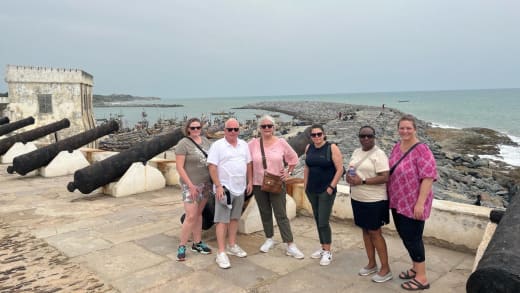
- Cape Coast and Elmina — slave castles, UNESCO heritage, Atlantic coast
- Kakum National Park — canopy walkway, tropical rainforest
- Kumasi — Ashanti kingdom, kente weaving, Kejetia market
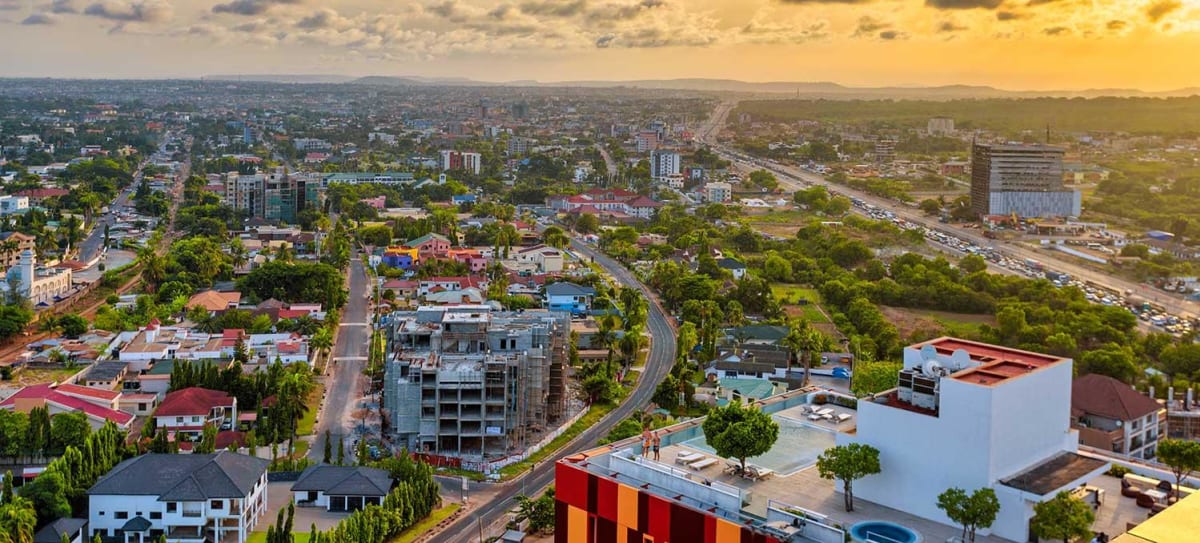
- Accra — capital city, arts scene, Jamestown, beaches
- Volta Region — Wli Falls, Tafi Atome, Lake Volta, Amedzofe
Worth adding if you have time:
- Mole National Park — Ghana's largest wildlife reserve, elephants, antelope
- Busua Beach — best surf beach in Ghana
- Paga Crocodile Pond — sacred crocodiles in the far north
- Nzulezo — stilt village built entirely on Lake Tadane
Food and Drink
Essential dishes to try
- Jollof rice — Ghana's version of the West African classic
- Fufu with light soup — pounded cassava served with delicate broth
- Kelewele — spiced fried plantain, best street food snack
- Waakye — rice and black-eyed peas with accompaniments
- Grilled tilapia — fresh fish grilled over charcoal with banku and pepper
- Chichinga — spiced street kebabs
Drinking safely
- Bottled water only — do not drink tap water
- Soft drinks, beer, and fresh coconut water are all safe
- Locally brewed Club Beer and Star Beer are Ghana staples
- Fresh fruit juices from street vendors are popular but choose vendors carefully
Practical Tips for First-Timers
SIM card Buy an MTN or Vodafone SIM card at the airport kiosk before you leave the terminal. A starter pack with data costs GHS 20 – 30. Register it with your passport on the spot.
Power Ghana uses Type G plugs (same as UK) at 230V. Bring a universal adapter if your devices use different plugs. Power cuts (known as dumsor) can occur — especially outside Accra. A portable power bank is useful.
Dress code Ghana is relatively relaxed about dress outside religious sites. At mosques and some traditional sites modest dress (covered shoulders and knees) is expected. At beaches and resorts standard beach wear is fine.
Photography Ghanaians are generally happy to be photographed but always ask first — especially at markets, ceremonies, and traditional sites. Some sites (slave castles, certain sacred spaces) have photography restrictions inside.
Bargaining Bargaining is expected and accepted at markets. Fixed-price shops and supermarkets do not bargain. For transport — always agree the price before you start. For tours — book with a company that gives you a fixed price upfront.
Internet and connectivity Mobile data (4G) is good in Accra, Cape Coast, and Kumasi. More patchy in rural and northern areas. Most hotels offer WiFi.
Frequently Asked Questions
Is Ghana safe for solo female travellers? Yes — Ghana is one of Africa's most recommended destinations for solo female travellers. The main precautions are standard travel awareness: do not walk alone late at night in unfamiliar areas, use reputable transport, and keep valuables secure. Many solo female travellers report Ghana as one of the most welcoming countries they have visited.
Do I need travel insurance for Ghana? Yes — strongly recommended. Ensure your policy covers medical treatment, emergency evacuation, trip cancellation, and baggage loss. Medical costs for serious illness or injury can be significant.
Can I use my credit or debit card in Ghana? Yes in cities and tourist areas. Cash is essential in markets, rural areas, and smaller towns. Inform your bank before travel.
How much money should I budget per day in Ghana?
Budget traveller:    $40 – 70 per day (guesthouses, local food, trotro)
Mid-range:           $100 – 180 per day (good hotels, restaurants, taxis)
Comfortable:         $200 – 350 per day (quality hotels, private tours)
Is bargaining expected in Ghana? At markets and with informal transport — yes. At established shops, restaurants, and tour companies — no. Professional service providers give you a fixed price upfront.
Plan Your Ghana Trip With Chris Mobility Africa
Getting around Ghana well is the difference between a good trip and an extraordinary one. A private driver and guide who knows the country — its roads, its history, its hidden spots — transforms your experience completely.
Chris Mobility Africa is a Ghana Tourism Authority licensed tour operator and chauffeur company based in the Volta Region. We provide private tours, airport transfers, chauffeur services, and cross-border travel across Ghana and West Africa.
Browse our Ghana tour packages — private day trips, multi-day experiences, and custom itineraries.
Book an airport transfer — professional meet and greet at Kotoka International Airport.
WhatsApp us your travel dates — we will send you a custom itinerary and quote within 24 hours.
Chris Mobility Africa — Ghana Tourism Authority licensed tour operator and chauffeur service. Volta Region, Ghana. chrismobilityafrica.com